
The Rise And Fall Of The Grand Hotel Scarborough
Four towers, 365 rooms and a giant V for Victoria. The story of Scarborough's Grand Hotel, from Victorian showpiece to one of Britain's worst-rated stays.

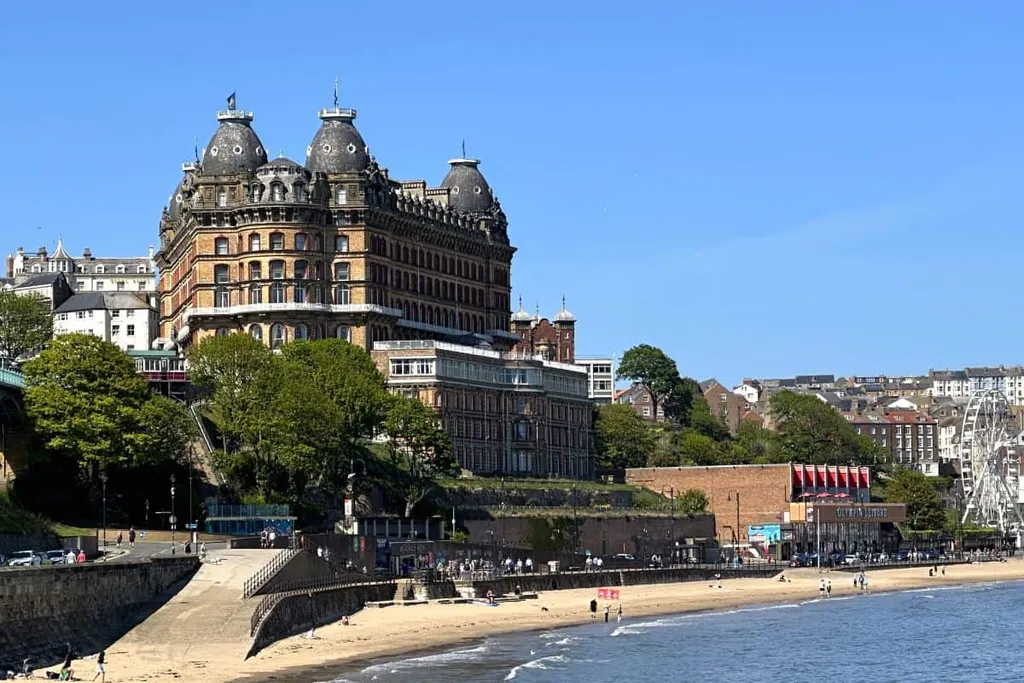
Perched dramatically on St Nicholas Cliff, gazing out over Scarborough's South Bay, The Grand Hotel Scarborough is more than bricks and mortar - it's a sprawling symbol of Victorian ambition, coastal charm, and the brutal realities of time. Its story isn't just grandeur and glamour but also grit, mismanagement, and public outcry. So, grab a cuppa and settle in - we're off on a wild ride through this seaside titan's glorious rise and lamentable fall.
A Monument to Victorian Majesty
Let's rewind to the 1860s. Scarborough was booming - a fashionable spa town drawing in high society with its sea air, mineral springs, and genteel promenade culture. Spotting an opportunity, a consortium of Yorkshire businessmen decided to shoot for the stars. They dreamt of a hotel so grand it would put the rest of Europe to shame.
They brought in Cuthbert Brodrick, a Hull-born architect and the mastermind behind Leeds Town Hall. His vision for Scarborough's showpiece? A giant "V" for Queen Victoria, packed with symbolism: four towers for the seasons, twelve floors for the months, 52 chimneys for the weeks, and a whopping 365 rooms - one for each day of the year. It was local, too, built from yellow bricks hauled in from Hunmanby.
When it opened in 1867, the Grand Hotel wasn't just impressive - it was a showstopper. It was the largest brick building in Europe. With seawater baths, sea views, and sophisticated dining, it was the sort of place you dressed up to be seen in.
The Glory Years: Churchill, Cricket and Champagne
The Grand was at its glittering best from the late 1800s into the early 20th century. It became the heartbeat of Scarborough's high society. If you were posh and packing a parasol, this was the place to stay.
In 1887, the hotel opened its dining room to the cricket festival crowd, forever linking itself with one of Scarborough's best-loved traditions. Ramsay MacDonald, Winston Churchill, and the future Edward VIII graced its halls. It was a heady mix of politics, play, and posh nosh.
Even war couldn't bring it down. Though shelled by the Germans in 1914, the Grand dusted itself off and carried on. Through World War II, it transformed again, housing RAF trainees and bolting anti-aircraft guns to those grand old towers.
Post-War Woes and Seaside Struggles
After a wartime stint and a pricey post-war refurb in 1947, the old girl reopened her doors. But the world had moved on. The golden age of British seaside holidays was fading fast, and sun-starved Brits were swapping Scarborough for Spain.
Gone were the ballgowns and banquets. In came value breaks and family rooms. Butlins reportedly invested £2.5 million in the hotel, and it worked for a while. The place had heart, if not high-thread-count linens.
Britannia and the Slide into Infamy
In 2004, Britannia Hotels took over. What happened next is the stuff of legend - and not the good kind. The Grand began to unravel fast.
There were reports of norovirus outbreaks, mouldy walls, sagging ceilings, and bleach in the drinking water. Online reviews painted a bleak picture: think Fawlty Towers without the laughs. There were reportedly fake windows, faulty lifts, and decor that screamed "1970s bingo hall" rather than Victorian luxury.
The hotel made headlines for all the wrong reasons. Britannia, named Which? Magazine's worst hotel chain, eight years on the trot, did little to inspire confidence.
Still Standing: History, Humour and Heartbreak
Yet through it all, the Grand still stands. Towering over the South Bay, that iconic V-shaped silhouette remains a fixture of the Scarborough skyline.
Some still stay there - lured by the history, the sea views, or perhaps morbid curiosity. It's affordable, centrally located, and if you squint hard enough, you can almost see the sparkle it once had. But many leave disappointed, their online reviews a litany of let-downs.
This isn't just about a hotel. It's about heritage. What do we do with grand old buildings that no longer fit modern moulds? Do we let them crumble? Or do we fight for them?
The Grand Reimagined: A Dream for the Future
So here's a thought - what if we dared to dream again?
Imagine a beautifully restored Grand Hotel, its yellow bricks scrubbed clean, Palm Court reimagined as a grand afternoon tea lounge, and the ballroom once again echoing with music and laughter.
A conservation-led approach could turn it into part hotel, part museum. Think Victorian spa rooms, tours about its wartime past, and restored bedrooms with antique flair. Local makers could be brought in to craft furniture, art, and interiors, making it a showcase of Yorkshire talent.
Or perhaps it becomes a cultural hub - a space for artists, exhibitions, live music, and heritage storytelling. The rooftop could host sunrise yoga or stargazing events. Its towers could be viewing platforms or cosy cafes. It could be a place where Scarborough celebrates itself.
Even more ambitious? A community-led ownership model. Like Saltburn's pier or Hebden Bridge's town hall, where local people rallied together to save something special. Imagine that - Scarborough's Grand Hotel, saved not by suits, but by the people.
It would cost a fortune, yes. But what a legacy it could leave.
Final Thoughts: Can The Grand Be Grand Again?
The Grand Hotel's story is pure Yorkshire theatre: high hopes, hard times, heartbreak, and - just maybe - hope again.
It started as a marvel. It became a memory. Today, it teeters somewhere between icon and eyesore. But it's not beyond saving. The Grand could rise again with care, creativity, and some old-fashioned northern grit.
So the next time you find yourself in Scarborough, take a walk by The Grand. Look up. Remember what it was. And dream of what it still could be.
Because some buildings aren't just bricks and mortar. They're stories. And The Grand's isn't over yet.
